Assess machine and process risks. Implement the right controls.
Serious incidents rarely begin with the incident itself. They begin with a hazard that was not identified, a safeguard that was missing, a control that was bypassed, or a system that was assumed to be safe. Machine and process safety is about finding those weaknesses before they become incidents.
Running does not mean "safe".
A running machine is no proof of safety. Neither is a process that appears stable. Hazards can remain unidentified, safeguards can be bypassed and critical controls can fail—while operations continue as usual. These gaps can turn routine work into a serious incident, putting lives at risk, damaging equipment and bringing production to a halt.
A machine starts unexpectedly.
Someone is working on equipment that was assumed to be safe.
A guard is bypassed.
A safeguard exists, but the hazard remains accessible.
An interlock doesn’t work.
A critical safety function can no longer be relied upon.
Stored energy is released.
Electrical, hydraulic, pneumatic, thermal or mechanical energy finds a path.
A process moves outside its safe limits.
A deviation develops before the organisation has time to respond.
2,100+ deaths from machinery & electricity in Indian factories, 2014–2023
Plus more than 11,000 non-fatal injuries — machinery moved by mechanical power alone accounts for 1,231 of those deaths.
130 major chemical accidents, 259 deaths in India over 10 years
Plus 563 serious injuries, across 2,393 Major Accident Hazard units in the chemical and petrochemical sectors.
Assess hazards and prioritise corrective actions.
Machine and process safety is about finding the weaknesses behind these numbers before they become incidents.
BRIGS brings trained safety professionals, engineering understanding and practical industrial experience to help you identify hazards, strengthen controls and build safer systems around the way your plant actually operates.
Where can things go wrong — and how do we prevent them?
Industrial safety isn’t one problem. The energy inside a machine is different from the hazards created by a chemical process, and neither is solved simply by putting up a warning sign. That is why we approach machine and process safety through three critical areas.
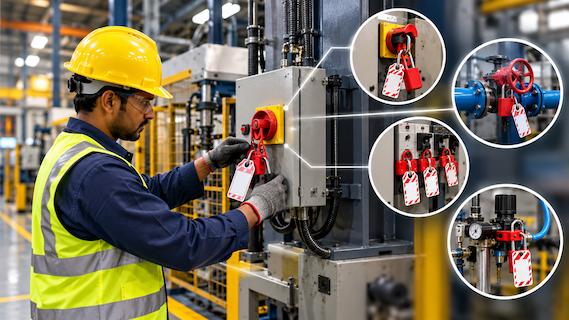
Lockout-Tagout (LOTO)
Policy, procedure, training and audit — so hazardous energy is controlled every time, not just on paper.
Explore LOTO arrow_forward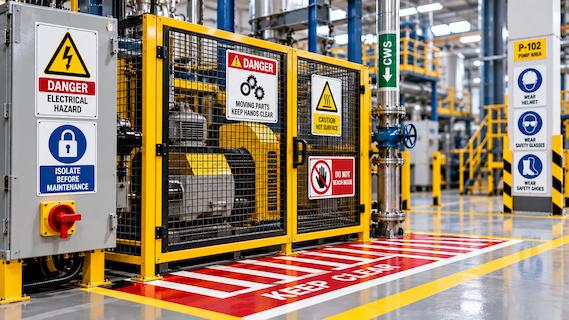
Machine Guarding & Interlocking
Guards and interlocks engineered to the actual hazard, then tested before they’re trusted.
Explore Machine Guarding arrow_forward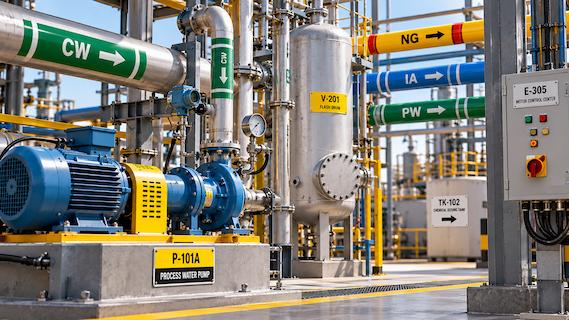
Process Safety
Hazard analysis, safeguards and change management for the risks that live in the process, not just the equipment.
Explore Process Safety arrow_forwardWe don’t start with a checklist. We start with understanding your operation.
Every plant has different equipment, processes, workforce, maintenance practices and risk profile. Our safety professionals work to understand:
Your equipment
How it operates, where people interact with it and where hazardous energy exists.
Your processes
What happens during normal operation — and what could happen when conditions change.
Your people
How operators, maintenance teams and contractors actually work around the equipment.
Your existing controls
What safeguards already exist, where they work well and where gaps remain.
Your incidents & observations
What the plant has already learned — and what those lessons tell you about future risk.
From there, we help translate safety requirements into practical engineering and operational controls that can work in the real world.
You know your plant. We bring the safety expertise to challenge what may have become “normal.”
Sometimes the biggest risk is the one everyone has become accustomed to.
A frequently bypassed interlock.
Convenient today, catastrophic the day it actually matters.
A LOTO procedure that doesn’t match the machine.
Written once, never updated as the equipment changed.
A safeguard that exists on paper but not in practice.
Documented compliance, undocumented reality.
A process change that introduced a new hazard.
A fix in one place can quietly create a risk in another.
A near-miss that was never investigated deeply enough.
The fix addressed the symptom, not the cause.
Not just finding what is wrong. Understanding why it can happen.
We look at the workplace with trained safety eyes, understand the engineering and operational context, and help turn those observations into meaningful preventive action — so it doesn’t happen again.
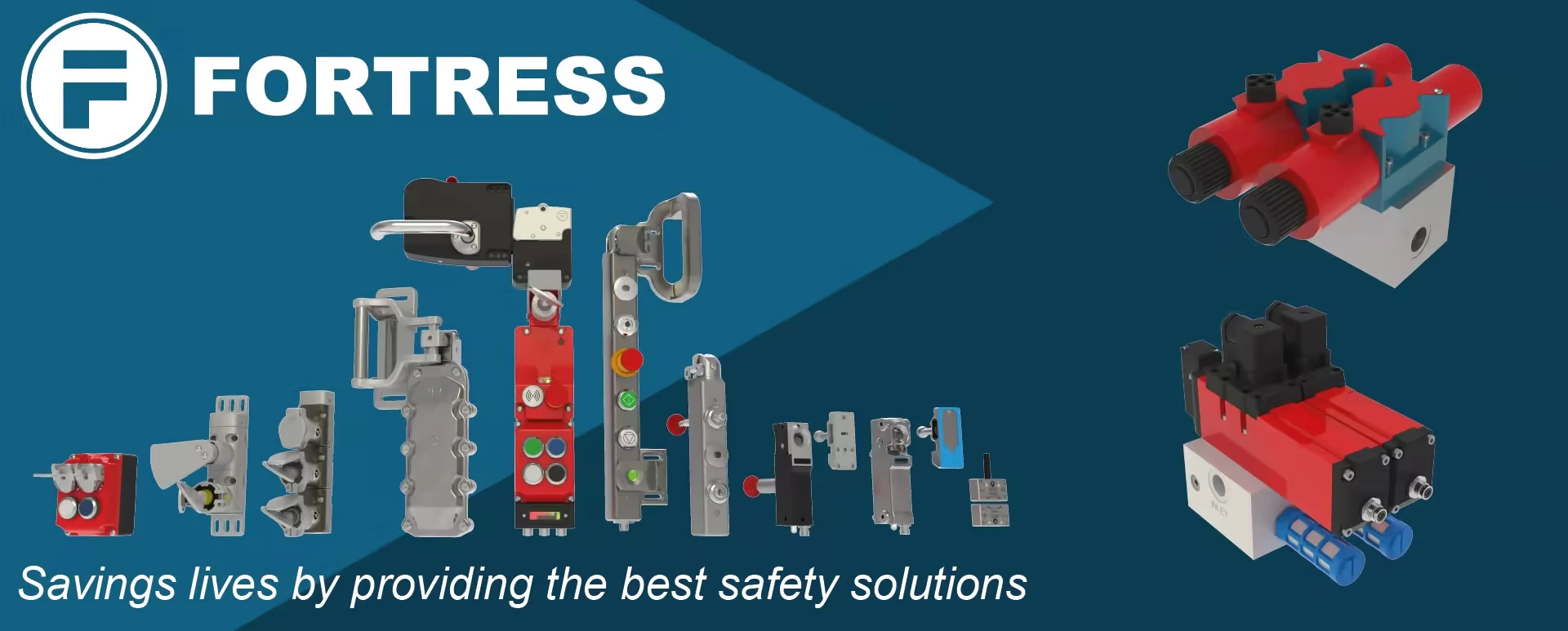
World class interlocking, with Fortress.
In partnership with Fortress, a world renowned safety solutions manufacturer, we bring you top of class interlocking for your workplace: easy to install, customisable and built to withstand the harshest environments.
Start wherever your risk actually is.
Do you have machines that need safeguarding?
We’ll help you identify exposure points and strengthen guarding and interlocking.
Do you need to improve your LOTO system?
We’ll help you move from generic procedures to equipment-specific energy control.
Are you managing process hazards?
We’ll help you identify deviations, evaluate safeguards and strengthen your process safety approach.
Not sure where the biggest risks are?
Start with a safety assessment.
Get in touch with our safety experts.
Tell us a little about your plant and we’ll help you see where to start — LOTO, machine guarding, process safety, or all three.