Most process incidents don’t start with a broken part.
They start with a change nobody reviewed — a modified setpoint, a new chemical, a bypassed safeguard. Process safety is about managing the risk that lives in how the process runs, not just the equipment it runs on.
The process changes. The risk assessment doesn’t.
A plant can run for years without a serious incident and still be carrying risk nobody has looked at recently — because the hazard analysis was done once, at commissioning, for a process that has since changed.
Changes made without review
A modified valve, a new chemical, a changed setpoint — without a management-of-change step, the risk goes unassessed.
Hazards assessed once, then forgotten
A hazard study done at commissioning doesn’t cover the plant you’re actually running five years later.
Safety systems never proof-tested
A safety system no one has tested isn’t a safeguard — it’s an assumption.
Process safety goes beyond protecting someone from a machine. It asks a bigger question:
What could happen if the process deviates from its safe operating conditions?
Process safety is about understanding these scenarios before they become catastrophic.
130 major chemical accidents, 259 deaths in India over 10 years
Plus 563 serious injuries — across 2,393 Major Accident Hazard units, where the government’s safety programme covers PSM, HAZOP and HIRA.
180 incidents, 200+ fatalities investigated in the U.S. since 1998
The U.S. Chemical Safety Board also counts 1,300+ injuries and billions of dollars in property and environmental damage.
One program, from hazard analysis to audit.
We don’t just investigate after something goes wrong. BRIGS builds the structure that catches process risk before it becomes an incident.
Process hazard analysis
Structured HAZOP/PHA studies for every process unit — not a one-time exercise at commissioning.
Layer of protection analysis
Verifying that your independent safeguards are actually independent, and actually sufficient.
Safety system verification
Safety instrumented systems tested and documented to the integrity level the risk requires.
Management of change
A defined review step so no modification to equipment, chemistry or procedure bypasses a safety check.
Process safety information
Equipment, chemical and process documentation kept current and accessible — not scattered across old files.
Incident investigation & audit
Root-cause investigation and scheduled review, so the same failure doesn’t happen twice.
Six outcomes, not just six steps.
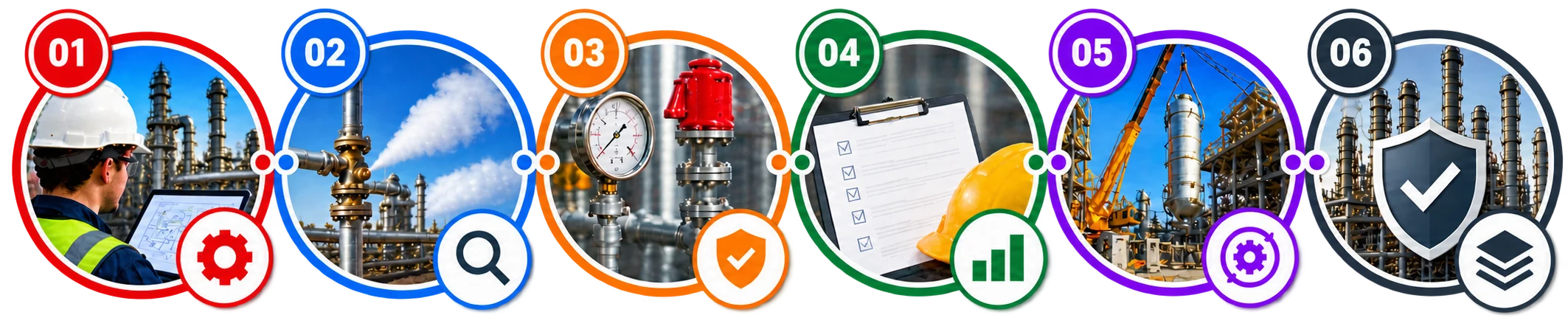
1. Understand Process
Identify what can deviate and why.
2. Identify Scenarios
Look beyond normal operation to abnormal and failure conditions.
3. Evaluate Safeguards
Assess whether existing layers of protection are adequate.
4. Learn from Incidents
Use incidents and near-misses to strengthen the system.
5. Manage Change
Recognise how equipment, process or procedural changes can introduce new risks.
6. Prevention
Build multiple layers of protection against serious events.
A process that identifies itself, before something has to go wrong.
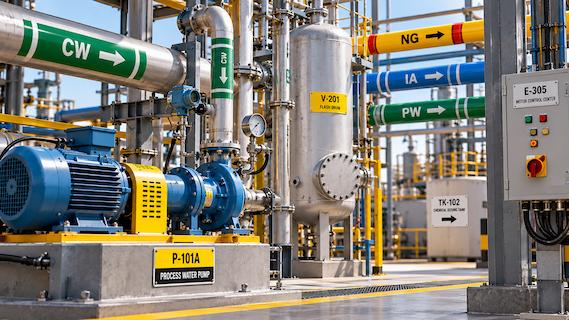
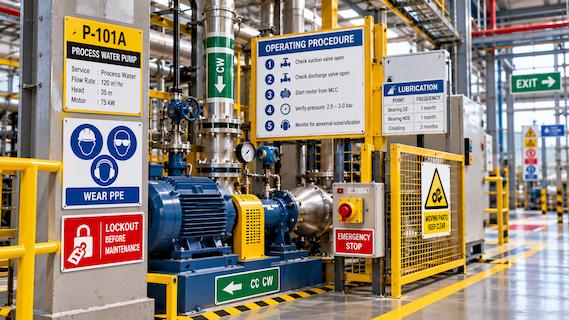
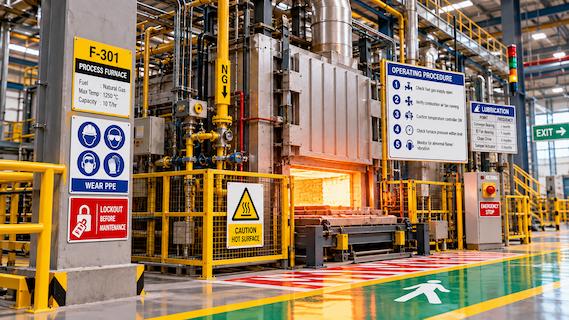
Documented, tested, and traceable — not assumed.
Standards-aligned
Built around OSHA Process Safety Management (29 CFR 1910.119) and recognized HAZOP/LOPA methodology.
One program
Hazard analysis, safeguards, change management and audit under one program, not scattered studies.
Documented, not assumed
Every safeguard is tested, dated and traceable — not just believed to work.

Find out what your process is carrying that no one has reassessed.
A structured hazard review tells you what’s actually covered today — and what’s been quietly assumed for years.