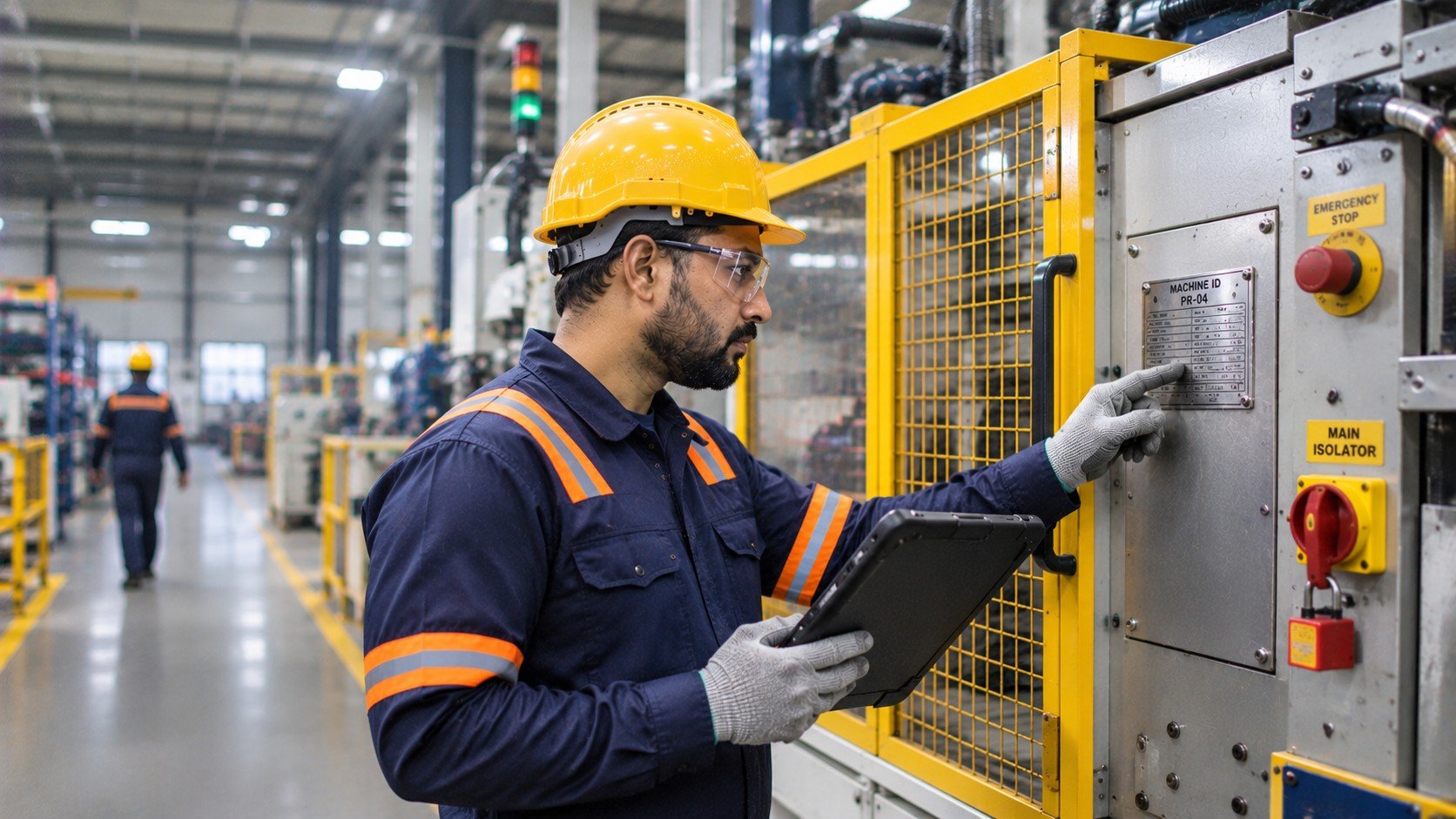
Machine Safety Begins at the Interface
Why Safe Equipment Still Depends on How People Interact With It
At 2:15 p.m., production has stopped. A machine has tripped, and material is still inside the equipment.
The safeguards are in place. The emergency stop is available. The maintenance procedure exists. A technician arrives to investigate. Before touching the machine, questions arise: Which machine is involved? What energy sources are present? Which isolation point applies? Does the procedure match the current configuration? Who owns the next step? How will the team verify that the machine is safe?
The controls exist, the procedure exists and the technician is trained. Yet the task can still become difficult when all three have to work together.
This illustrative situation captures the central point: a safe machine still depends on a safe interaction. Machine safety must consider not only equipment and safeguards, but also how people operate, clean, adjust, inspect and maintain it.
1. Safety Does Not Stop at the Safeguard
A machine is a technical system. The workplace around it is a human and operational system. What happens between them matters.
That relationship includes guards, controls, displays, access points, labels, alarms, isolation methods, maintenance arrangements, procedures, responsibilities and information needed for decisions.
A guard may be correctly installed while the access point is difficult to identify. An isolation point may exist while its purpose is unclear. A control may work correctly while the procedure leaves the person uncertain about what comes next.
A safeguard can be technically correct without making the intended safe action obvious.
At the point of work, can the person identify the machine, understand its state and recognise the correct control? This does not replace engineering safeguards; it checks whether equipment, controls and work methods support one another.
2. Normal Production Is Only One Condition
A machine may be straightforward during normal production. More demanding situations begin when something changes: a sensor trips, material jams, a guard is opened, cleaning begins or maintenance is required.
The equipment may be the same, but the task has changed. Machine safety should consider setup, adjustment, cleaning, inspection, fault recovery and maintenance—not only normal production.
The UK Health and Safety Executive notes that machinery risks can arise during interventions such as blockage clearing and maintenance. HSE: Machine interventions. A safeguard suitable for normal operation may not address every intervention; assess the task and its hazards under actual conditions.
3. A Machine Communicates Through More Than a Screen
In automated manufacturing, human-machine interface often means the HMI or control panel. In practice, the interface is broader.
People read labels, interpret indicators, locate access points, recognise machine states, follow instructions, operate controls, respond to alarms and move around equipment.
Accurate information can still leave the person unsure what matters. An asset plate may be difficult to see; a warning may be disconnected from the task that requires it.
The question is whether people can understand what to do when action is required. Factory UX examines what people see, understand and act upon, including the physical and visual environment around the machine.
4. Maintenance Changes the Task
Production often follows a defined sequence. Maintenance introduces variation.
A technician may need to access another part of the machine, investigate an unexpected condition or account for stored energy. Machine identity, energy sources, isolation points, procedures, responsibilities and verification need to align.
For covered servicing activities, the US OSHA Control of Hazardous Energy standard requires an energy-control programme, including procedures, training and periodic inspections, where unexpected energisation or stored energy could cause injury. Its scope is jurisdiction-specific. OSHA: Control of Hazardous Energy.
The task around the machine is part of the safety system. Ask: what does the workplace need to make clear rather than leave to memory?
5. Experience Helps. It Should Not Carry the System.
Experience is valuable. Employees recognise unusual sounds, conditions, sequences and warning signs that may not be obvious to someone new.
The concern is when experience becomes the hidden mechanism that makes a difficult system workable. One technician knows where to look; another has to ask. A senior employee may know that a machine configuration requires an additional check, but that knowledge may not appear in the current instruction.
A well-designed workplace reduces unnecessary dependence on memory while preserving expertise. Routine information, asset identity, control purpose and expected actions should be clear without informal explanation.
Machine safety is therefore a design question involving equipment, information, layout, procedures and responsibilities—not only training.
6. When the Machine Changes, the Work Around It Changes
Machines evolve: controls are upgraded, components replaced, software changed and layouts moved. A drawing may be updated while a physical label remains unchanged; a new access arrangement may make maintenance less straightforward.
Keeping equipment, information, procedures and working conditions aligned maintains the intended level of control.
A machine modification should prompt review of related risk assessments, safeguards, instructions, maintenance methods, training and identification. The system around the machine needs to reflect the equipment actually installed.
7. From Safeguard to Safe Action
Compliance remains essential. Engineering controls, procedures, inspections, competence and applicable requirements provide the foundation.
But the presence of a control does not automatically make the intended action clear.
What does the operator see? What does the technician need to remember? What happens during a fault? Can the isolation point be identified? Does the procedure reflect the current machine? Are responsibilities clear?
The question is not only whether a safeguard exists. It is whether the surrounding work enables the intended safe action.
This does not replace formal risk assessment or engineering verification. It examines usability at the point of work.
8. The Safe Interaction Test
Select one machine and one real activity: startup, cleaning, changeover, inspection, fault recovery or maintenance. Observe the task under the approved site procedure with appropriately competent people. Do not create an unsafe condition or ask anyone to bypass a safeguard.
Ask:
- Can the person identify the correct equipment?
- Can they understand the machine state and applicable hazard?
- Is the next action clear?
- Does the procedure match the current configuration?
- Can the team verify the control before work proceeds or the machine returns to service?
These questions do not replace formal risk assessment. Persistent difficulty identifying assets, locating isolation points, finding information or understanding responsibilities deserves investigation, even when no immediate failure is visible.
9. Look at the Machine, the Person and the Process Together
A machine cannot be evaluated only as a piece of equipment.
The person brings training, experience and decision-making. The process brings procedures, approvals, maintenance methods, isolation requirements and responsibilities. Information connects these elements.
When one changes, the others may need to change with it. A new control may require revised instructions; a machine modification may affect access, isolation and identification. The People × Machines × Processes lens prevents related machine, training and procedure issues from being treated as separate.
10. The BRIGS Way: See Before Changing
BRIGS approaches machine safety by examining the interaction between people, equipment and process.
SEE the task as performed, including operation, cleaning, adjustment, fault recovery and maintenance.
CONNECT the machine with its safeguards, information, procedures, responsibilities and physical environment.
DIAGNOSE where risk, confusion, friction or unnecessary dependency appears.
DESIGN the response around the identified gap.
IMPLEMENT the required engineering, physical, visual, procedural or digital improvement.
IMPROVE by checking how the intended control performs under real working conditions.
The response may involve guarding, interlocking, energy isolation, clearer identification, revised procedures or workplace changes. The risk assessment and task evidence should determine the intervention.
BRIGS Perspective: Safe Machines Need Usable Workplaces
At BRIGS, machine safety is viewed through People, Machines and Processes.
A machine needs appropriate safeguards. People need to understand the equipment. Processes need to reflect actual configuration and working conditions. Information needs to reach the person who needs it.
Factory UX makes the interaction understandable at the point of work. Factory OS can connect relevant information, workflows and controls. Machine and process safety address engineering and operating controls, while workplace improvement keeps the solution grounded in the physical environment.
The goal is to make intended work clearer and more controllable for the people who operate and maintain equipment.
A Practical Next Step With BRIGS
Choose one machine where people regularly operate, clean, adjust, inspect or maintain equipment. Observe one approved activity. Note what people see, touch, read, interpret and remember, then compare it with the intended controls and current machine configuration.
The gaps may involve equipment, workplace, information or process. A BRIGS site assessment can examine these interactions and identify where engineering, visual, procedural or workplace improvements may be needed.
Start with one machine. Follow the real work. Check whether the intended safe action is clear.
Machine safety is not only about safeguards built into equipment. It is also about whether the workplace enables people to use them as intended.
Related reading
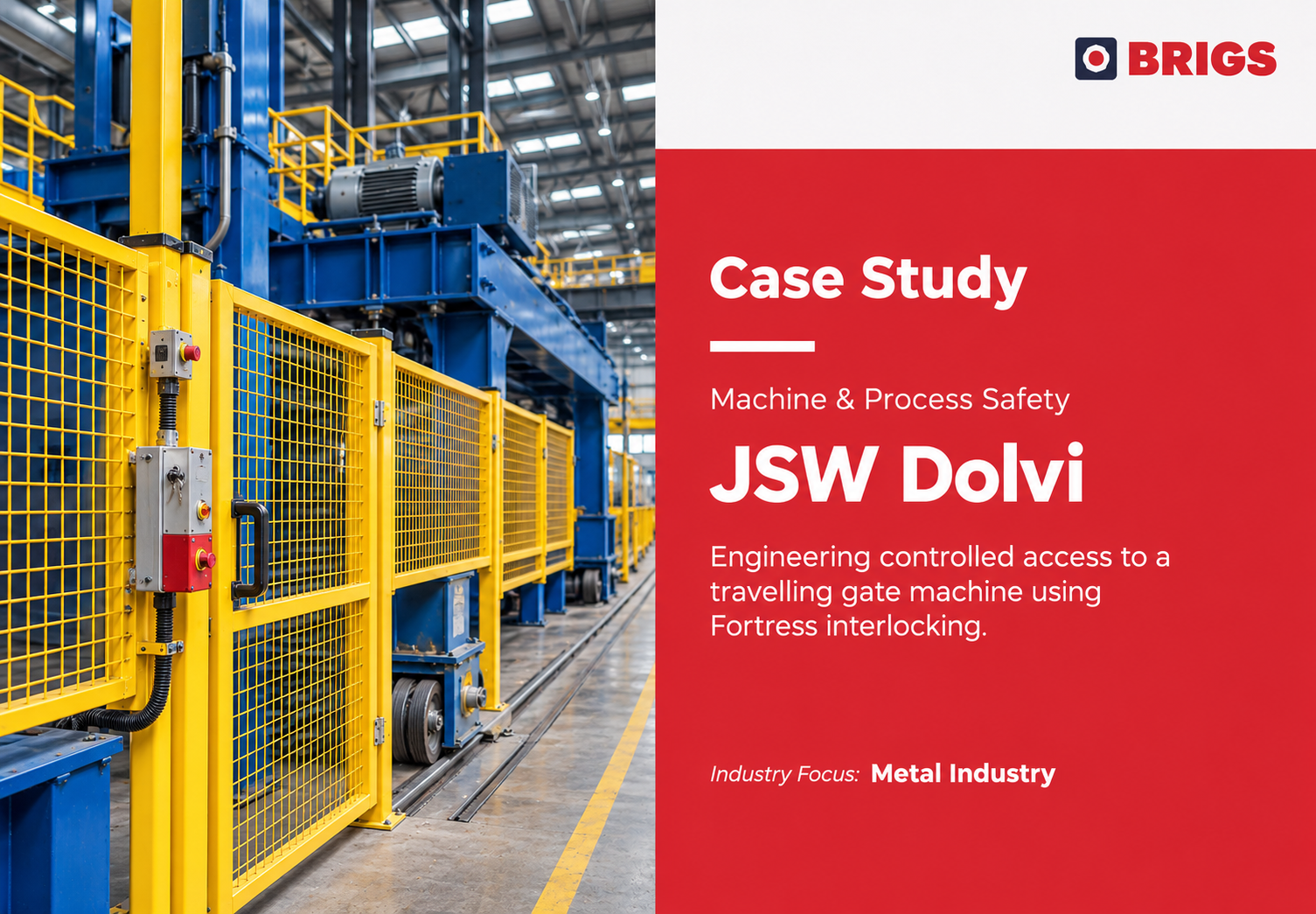
Engineering Controlled Access to a Travelling Gate Machine at JSW Dolvi
Following an injury caused by an unexpected machine start-up, BRIGS combined machine guarding and Fortress trapped-key interlocking to strengthen access control around JSW Dolvi's Travelling Gate machine.
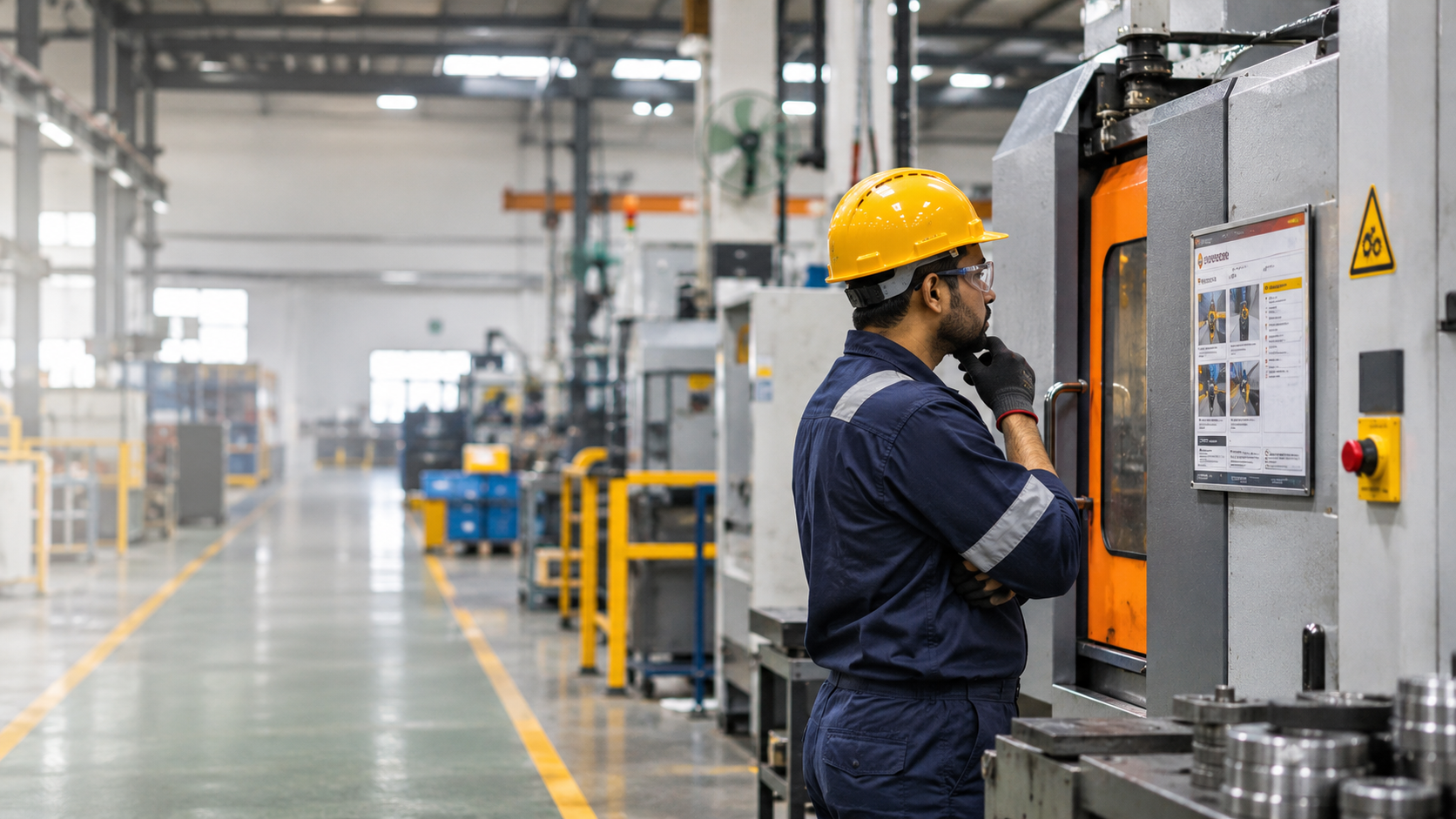
Understanding the Factory as a Process
Understand how people, machines, processes and information work together—and why gaps between them can disrupt everyday factory operations. Explore how BRIGS identifies these gaps and improves the workplace through Factory UX, Factory OS, safety and process improvement.
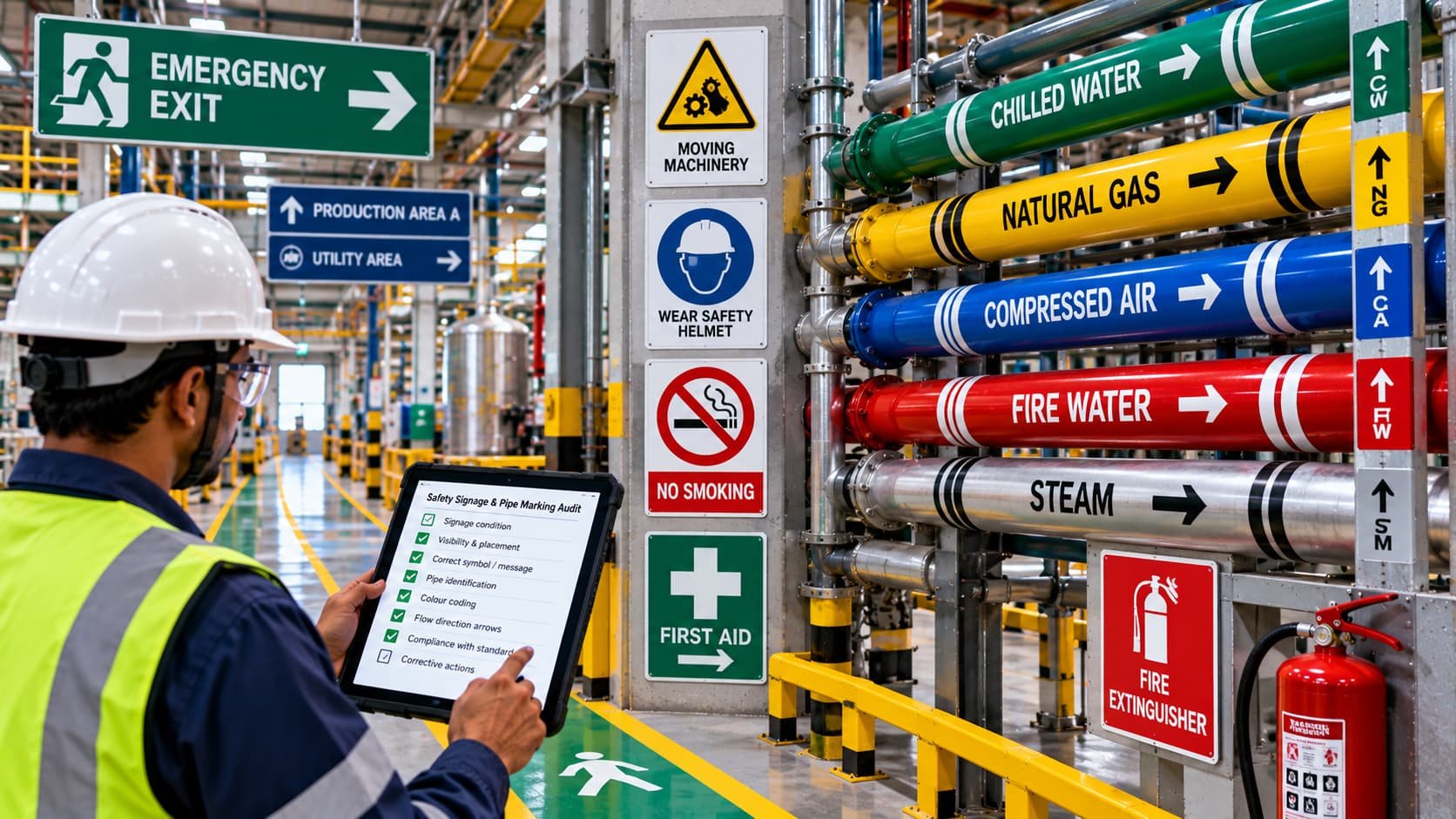
Safety Signage and Pipe Marking: When the Factory Itself Communicates Safety
A warning sign should not need an explanation. A pipeline should not need to be traced to understand what it carries. In a well-designed industrial workplace, critical information is visible before someone makes a decision.
Have a similar challenge on your site?
Tell us what you are trying to improve and we will help you find the practical next step.