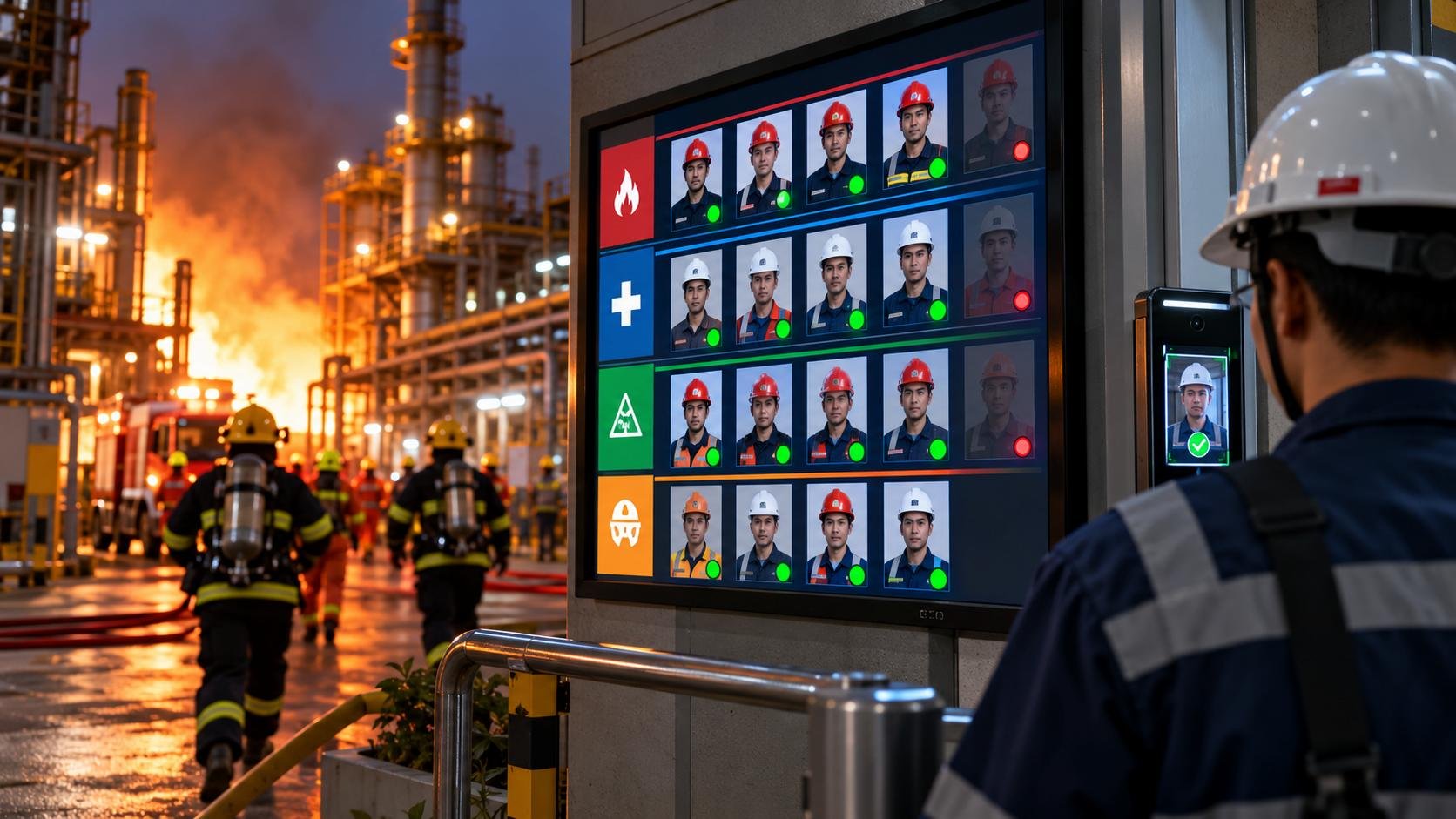
Imagine an emergency at a manufacturing plant. A fire breaks out, a chemical leak is detected, or a worker suffers a serious injury.
The emergency alarm is raised. The response team needs to assemble quickly.
But there is a simple question that can make a significant difference: Who from the Emergency Response Team (ERT) is actually present at the site right now?
Many companies have a documented emergency response plan, trained personnel, and an ERT member list displayed at the security gate or another designated location. These are important elements of emergency preparedness.
However, there is often a gap between the information displayed and the people who are actually available. This gap can lead to confusion and delays during critical moments.
The problem with a printed ERT list
In many industrial establishments, ERT member details are maintained in spreadsheets, printed and displayed on notice boards. The list may include names, photographs, designations, contact numbers, and assigned responsibilities.
The information is useful, but it has a fundamental limitation: a printed list tells us who belongs to the team, not who is available at the site at this moment.
Employees may be on leave, working in another location, attending training, or assigned to a different shift. Contractors and other personnel may also be part of the emergency response arrangement.
Unless someone regularly updates the displayed information, the list can quickly become outdated.
During an emergency, people may lose valuable time trying to locate the right person, calling multiple numbers, or discovering that a designated team member is not available.
The problem is not necessarily the emergency response plan itself. It is the reliability of the information available when people need to act.
The manual IN/OUT board: A step forward, but not without limitations
Some companies address this issue using an IN/OUT board. When an ERT member enters or leaves the premises, someone manually changes the person's status.
This is a practical improvement over a static list because it attempts to show availability.
However, the process depends on consistent human intervention.
- Will the status be updated every time someone enters or exits?
- What happens during shift changes, when several people move in a short period?
- Who is responsible for updating the board when the designated person is busy?
- Can the displayed information be trusted during a busy or unusual operating day?
A manual board can work when processes are consistently followed. But it also introduces another operational responsibility — and another opportunity for human error.
In emergency preparedness, information is useful only when it is sufficiently accurate and current for the decision being made.
Why not integrate with the existing attendance system?
A natural next step is to use the attendance system that the company already has.
If the organisation records employee attendance through biometric terminals, access-control systems, or attendance software, it may appear straightforward to use that information to update the ERT display automatically.
In practice, it is not always that simple.
Many attendance solutions are designed primarily for payroll, workforce management, or attendance reporting. Access to real-time employee IN/OUT data may not be available through a supported API. Some vendors restrict access to their databases, require additional licensing, or offer integration only through a separate project.
Even when integration is technically possible, the effort involved in understanding another vendor's system, obtaining access, mapping employee identities, handling exceptions, and maintaining the integration may be disproportionate to the requirements of a dedicated ERT display.
This creates an unusual situation: a company may already have a sophisticated attendance system, yet still struggle to maintain a reliable, real-time display of its emergency response personnel.
The challenge is not always a lack of technology. Sometimes, it is the complexity of connecting systems that were never designed to work together.
The real question is not whether your ERT list is displayed. It is whether the information on that display can be relied upon when an emergency occurs.
A dedicated digital ERT display
A dedicated ERT display offers another approach: instead of depending on an existing attendance platform, it maintains the information needed for emergency response through its own attendance mechanism.
For example, a face-recognition terminal installed at a designated entry point can identify registered ERT members as they check in or out. The system can then update their recorded status and display the relevant information on a digital screen.
Depending on the configuration, the display can show:
- ERT members currently recorded as present.
- Members who are absent or whose presence has not been confirmed.
- Photographs and identification details to help personnel recognise the right people.
- Team assignments and other emergency response information relevant to the site.
The objective is not simply to replace paper with a screen. It is to reduce the gap between the attendance information being captured and the information available to people responsible for coordinating an emergency.
A dedicated solution can also reduce dependency on third-party attendance-system integration, making deployment simpler where access to existing systems is unavailable or impractical.
What should a digital ERT display actually solve?
Digitisation is valuable only when it addresses the operational problem. A digital display should be evaluated on more than its appearance or the technology used to capture attendance.
1. Is the information current?
The display should reflect recorded entry and exit events promptly. It should also make the last update time visible so users can judge how current the information is.
2. Can people identify the right responders quickly?
Names alone may not be sufficient, particularly in large facilities or organisations with multiple shifts and teams. Photographs, roles, and team assignments can make the information easier to use.
3. What happens when a person forgets to check in or out?
No attendance mechanism is perfect. A useful system should provide a way to correct exceptions and clearly communicate uncertainty rather than presenting potentially stale information as unquestionable truth.
4. Does it work independently of unrelated systems?
Where integration is difficult, a self-contained solution may be easier to deploy and maintain. Where reliable, supported integrations already exist, reusing them may still be appropriate.
5. Is the display available when it is needed?
The screen, network, power supply, and attendance mechanism are all part of the operational solution. Facilities should consider what happens during outages and provide appropriate fallback procedures.
These questions matter because an ERT display is not just an information screen. It supports decisions during situations where time and clarity are important.
Face recognition: A practical deployment option
Face recognition can simplify attendance capture for a dedicated ERT solution because registered personnel can be identified without relying entirely on manual status changes or access to another vendor's database.
It can be particularly useful when the requirement is narrowly defined: identify ERT members at a designated point, record their attendance events, and make their status visible on a screen.
However, face recognition does not eliminate every attendance-related risk. Its effectiveness depends on correct enrolment, suitable camera placement, lighting, reliable event recording, and procedures for handling failed recognition or missed check-outs.
Organisations should also consider applicable privacy and data-protection requirements, access controls for biometric data, and appropriate alternatives for people who cannot use the recognition mechanism.
The goal is not to introduce the most complicated technology. It is to implement a solution that is practical, dependable, and proportionate to the site's needs.
Compliance is the starting point, not the finish line
Emergency preparedness requirements in India vary depending on the industry, applicable legislation, factory or establishment rules, and the site's approved emergency arrangements.
Displaying required emergency information and maintaining an effective response organisation are important responsibilities. Organisations should verify the specific display, documentation, and operational requirements applicable to their facility.
But compliance should not end with putting a list on a wall.
A displayed list can satisfy an administrative expectation while still failing to answer a more operational question: which designated responders are actually available?
A digital ERT display can help bridge this gap, provided it is supported by a reliable attendance process, clear exception handling, and a suitable emergency response procedure.
The display should complement — not replace — training, drills, communication arrangements, and the broader emergency response plan.
Making emergency preparedness more practical
At Brigs, we see this as a practical workplace digitisation problem. Organisations should not have to undertake a complex integration project merely to make the availability of their emergency response personnel visible.
A dedicated ERT display using face recognition is one way to address this need, particularly where existing attendance systems do not offer a straightforward integration route.
The larger lesson applies beyond ERT management: digitisation is most useful when it brings the right information to the right people, at the point where they need to make a decision.
During an emergency, knowing who is designated to respond is important. Knowing who has actually been recorded as present can be equally important.
The real question is not whether your ERT list is displayed. It is whether the information on that display can be relied upon when an emergency occurs.
About Brigs: Brigs Espro Services works on practical workplace safety, productivity, and digital workplace solutions for industrial environments, including dedicated digital ERT display solutions using face recognition.
The role of the Brigs app in ERT management
The Brigs app enhances emergency response by providing real-time access to the ERT member list.
- ERT members can be viewed anywhere, anytime.
- Users can initiate calls directly from the app, ensuring quick communication during emergencies.
- The app can send alerts and updates to all ERT members, keeping everyone informed.
This accessibility helps bridge the gap between the documented plan and actual availability, making it easier for teams to respond effectively. The app works alongside a dedicated digital ERT display, ensuring that both systems provide accurate and timely information during critical situations.
Related reading
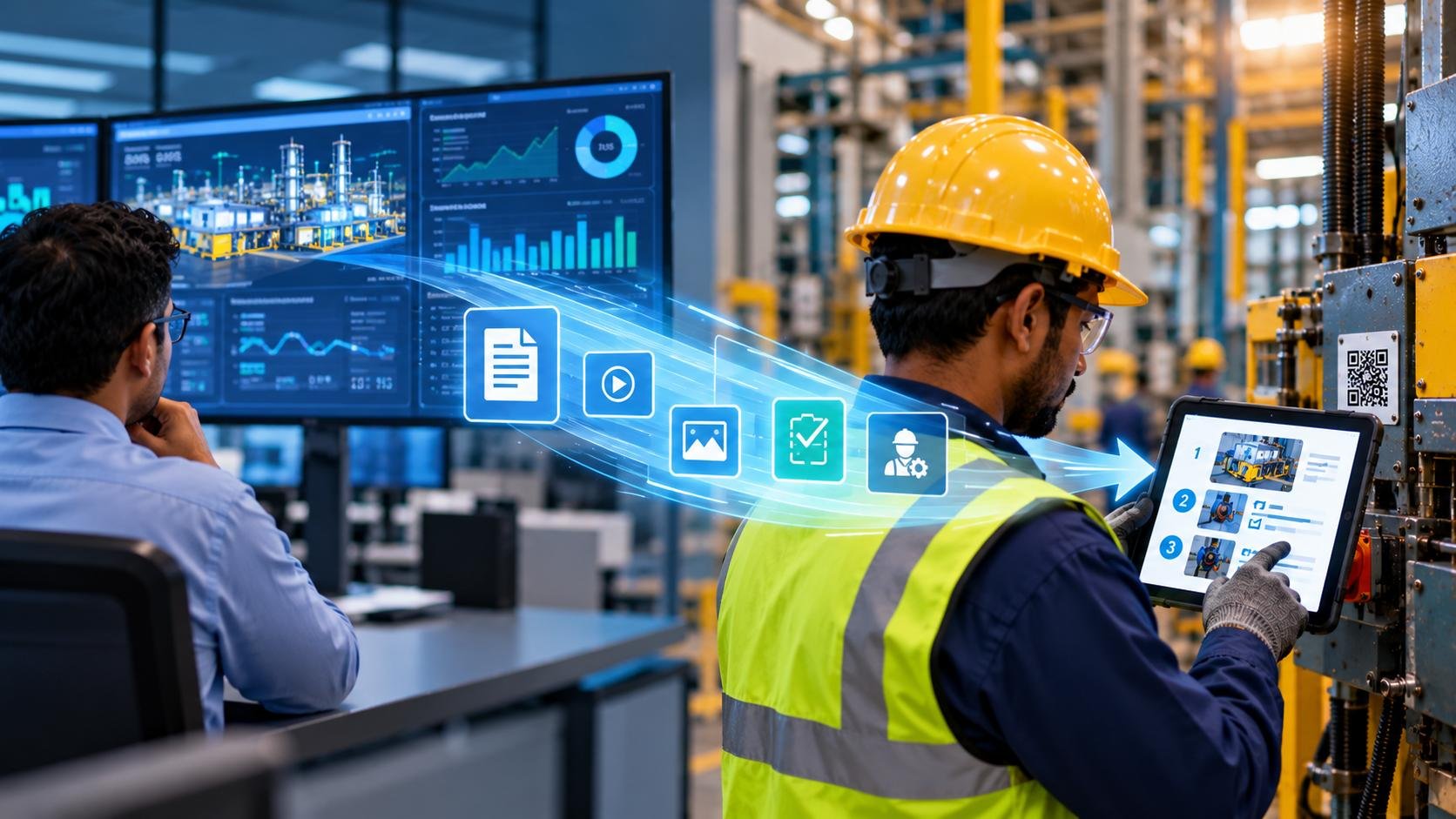
Digital Transformation in Manufacturing: Why the Last Mile Matters More Than Another Dashboard
Factories have dashboards, analytics and real-time reports. But does the worker at the machine have the right information at the right time? Why digital transformation must reach the last mile.

Last Mile - The Missing Link
Most companies invest in software to help management monitor operations, but often overlook the people who actually do the work on the shop floor. Many workers, especially contract employees, don't have easy access to the right information when and where they need it. This gap between what the system says and what happens on the ground can affect both safety and productivity.
Have a similar challenge on your site?
Tell us what you are trying to improve and we will help you find the practical next step.