
The 90-Second Problem
What Small Moments of Friction Reveal About Factory Design
A technician spends a minute finding the right drawing. An operator walks back to confirm which valve is correct. A supervisor calls a colleague because the next step is unclear. None of these moments, taken alone, looks like a major manufacturing problem.
But factories repeat work. The same search may happen across shifts; the same question may be asked by several operators; the same approval may require follow-up. Small delays can become part of how a plant operates—consuming attention, adding handoffs and creating dependency on experience.
The important question is not whether 90 seconds is a lot of time.
It is: what does the 90 seconds reveal?
The 90-second problem is not a stopwatch standard or a claim that every delay matters. It is a small observation window: long enough to expose friction, short enough to use during an ordinary task.
1. The Smallest Delays Can Carry a Useful Signal
Manufacturing leaders naturally look for large losses: downtime, rejects, maintenance backlog, safety incidents and missed targets. These measures matter. But people experience the factory through smaller questions:
- Where do I go?
- Which machine is this?
- Which document applies?
- Who needs to approve this?
- What do I do next?
A worker may find the answer quickly; another may need to search, ask or leave the work area. That difference reveals how clearly the workplace supports the task. The 90-second observation makes such interactions visible.
2. The 90-Second Test
Choose one ordinary task—not a special audit task. It could be checking machine status, locating a spare, beginning maintenance, completing a permit step, verifying a parameter or handing work to another team.
Observe only the first 90 seconds.
Do not measure the worker's speed, judge the worker or immediately propose a digital solution. Observe what the system asks the person to do.
Count pauses, searches, clarifications and switches between paper, screen, machine, person and memory. Note where responsibility becomes unclear or information is missing, distant or ambiguous.
Record the task, what the person needed, pauses or searches, the information or people consulted, what allowed work to continue and what remained unclear. Ninety seconds is not a universal threshold; it is a practical way to make friction visible.
3. What Happened Inside Those 90 Seconds?
Consider an illustrative maintenance situation.
A technician arrives at a machine to begin planned work. The first action should be straightforward: identify the equipment and confirm the required information. Instead, the machine tag is difficult to read. The technician checks a nearby panel, then the maintenance system, then asks a colleague which revision of the drawing applies.
Machine identification, information, procedure, workplace design and human knowledge have interacted before the technical work begins. Treat the friction as a signal, not automatically as a failure.
HSE guidance identifies design, workload, time pressure and communication as factors that influence human performance. HSE: Introduction to human factors.
Record what happened before judging why.
4. Where Is the Friction Coming From?
Ask not only, "How much time was lost?" but "What consumed it?"
Search friction means the person knows what is needed but cannot locate it quickly. A drawing, asset record or instruction may exist, but not where the task requires it.
Interpretation friction means information exists but its application is unclear. A label, instruction or control does not show what applies to the current situation.
Handoff friction means the next action depends on another person. Ownership, approval or status is unclear, so the worker must call or wait.
Movement friction means leaving the work area is necessary to retrieve information or obtain a decision.
Memory friction appears when asking an experienced employee is faster than using the formal system. Knowledge may be held by a few people rather than made accessible through the workplace and its information.
These categories are prompts for investigation, not predetermined root causes. The same delay can have different explanations in different factories. Friction is not automatically a safety failure, and not every pause requires redesign.
5. When Friction Repeats, It Becomes Part of the Process
One slow moment is often normal. A repeated slow moment is different.
Suppose a technician spends 90 seconds locating an equipment record once a month. The effect may be negligible. Repeat the same search across technicians, shifts and assets every day and it becomes accumulated friction.
Repeated friction consumes labour time without necessarily appearing as downtime. It adds cognitive demand as people remember where information is stored, who can clarify it and how to recover when the expected route fails.
A difficult step does not automatically create an unsafe condition, but repeated reliance on memory, workarounds or extra clarification deserves investigation—especially where hazards or critical controls are involved.
HSE identifies unclear information, equipment interfaces, task complexity, time available, workload and communication as influences on human performance. HSE: Performance influencing factors.
Look for repetition across people, assets, shifts or locations before deciding whether the issue is significant.
6. Factory UX: Designing Out the Unnecessary Pause
Factory UX asks whether people can see, understand and act in the environment where work happens. It connects workplace design with human factors, ergonomics, safety engineering and work-system design.
If a person repeatedly pauses to identify a machine, find an instruction, understand a control or determine what happens next, the workplace is telling us something about its usability.
The answer may be a clearer label, better visual communication, easier access to instructions or a more logical physical arrangement. It may also be deeper: the task or process itself may need redesign.
HSE notes that plant and workstation design influence human performance and recommends involving end users in design. HSE: Design and human factors. The aim is to remove unnecessary uncertainty, not checks the task requires.
7. Factory OS: Connecting the Pause to the Workflow
Some friction is a workflow problem, not a labelling issue. A technician may have the procedure but still need to confirm its revision, permit status or completion of another team's isolation step.
In the BRIGS sense, Factory OS is the structure connecting operational information, workflows, permissions, maintenance activities and workplace controls so the right information can move with the work.
Digitalisation should support an understood problem rather than become the starting point.
If "What do I do next?" repeatedly requires a phone call, spreadsheet, paper file, separate application or experienced employee, the first question should not be:
Which software should we buy?
It should be:
What part of the workflow is currently disconnected?
8. From 90 Seconds to System Design
The observation creates a bridge between diagnosis and intervention.
SEE the work as it actually happens. Observe the task, not just the procedure.
CONNECT the friction to the surrounding information, machine, procedure, approval or physical arrangement.
DIAGNOSE before choosing an intervention. Establish what is causing the pause and whether it is repeated.
DESIGN the smallest practical improvement that addresses the condition without removing necessary controls.
IMPLEMENT it where the work happens—physically, visually, procedurally, digitally or in combination.
IMPROVE by observing the task again. Check whether friction reduced and whether another difficulty appeared.
The aim is not speed at any cost, but less avoidable friction without creating new problems.
9. A Practical Factory Friction Walk
Choose three routine tasks. Observe the first 90 seconds of each and record pauses, searches, clarifications, movements, handoffs and system switches.
Then ask:
What is the system asking the person to compensate for?
Investigate the answer rather than assuming it.
Ask one more question:
If we removed this friction, what would become easier to control?
This shifts attention from time-saving to information usability, consistency, safety and efficiency.
10. Turning Friction Into a Design Signal
BRIGS treats small moments as signals within a larger system.
Factory UX examines the human interaction layer: can people see, understand and act?
Factory OS examines operational coordination: can information, workflows, permissions and controls move with the work?
Machine Safety and Process Safety examine the engineering and control layer: are safeguards aligned with the real task?
Workplace improvement connects these layers to the physical environment.
A missing label may point toward Factory UX. A missing approval status may point toward Factory OS. An unclear machine interface may require engineering attention. A procedure that repeatedly creates confusion may require process redesign. Often, the answer is a combination.
BRIGS starts with the friction, not with a predetermined solution.
The Factory Is Speaking in Small Moments
Factories communicate weaknesses through repeated questions, searches, avoidable walking, manual follow-up, unclear handoffs and dependence on the person who "knows how things work." Not every delay matters, but repeated friction shows where people are bridging gaps between People, Machines, Processes and Information.
The 90-second problem provides a deliberately small way to see those gaps.
The objective is not to save 90 seconds. It is to discover what the 90 seconds is made of.
A Practical Next Step With BRIGS
Start with a BRIGS site assessment and select a few routine point-of-work tasks for a 90-second friction observation.
The outcome should not be a score. It should reveal where people repeatedly search, wait, ask, switch, move or compensate—and where Factory UX, Factory OS, safety or workplace improvements may be needed.
The question is simple:
Where does your factory ask people to spend 90 seconds solving a problem the system could have prevented?
Related reading
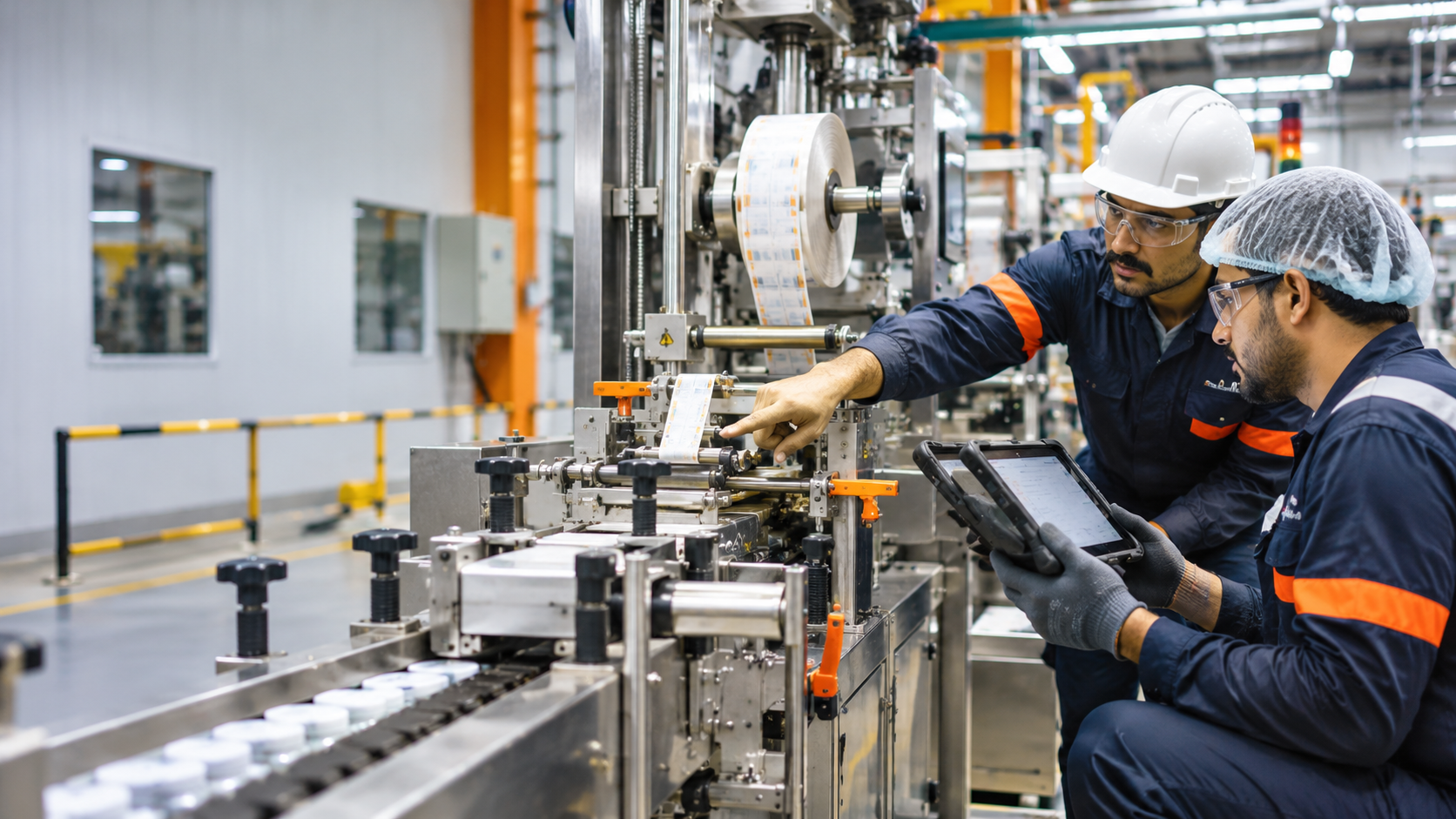
The Factory Reality Gap
Why can trained teams, established procedures and modern equipment still struggle on the shop floor? Explore the gap between planned work and real operating conditions—and how to identify what needs to change.
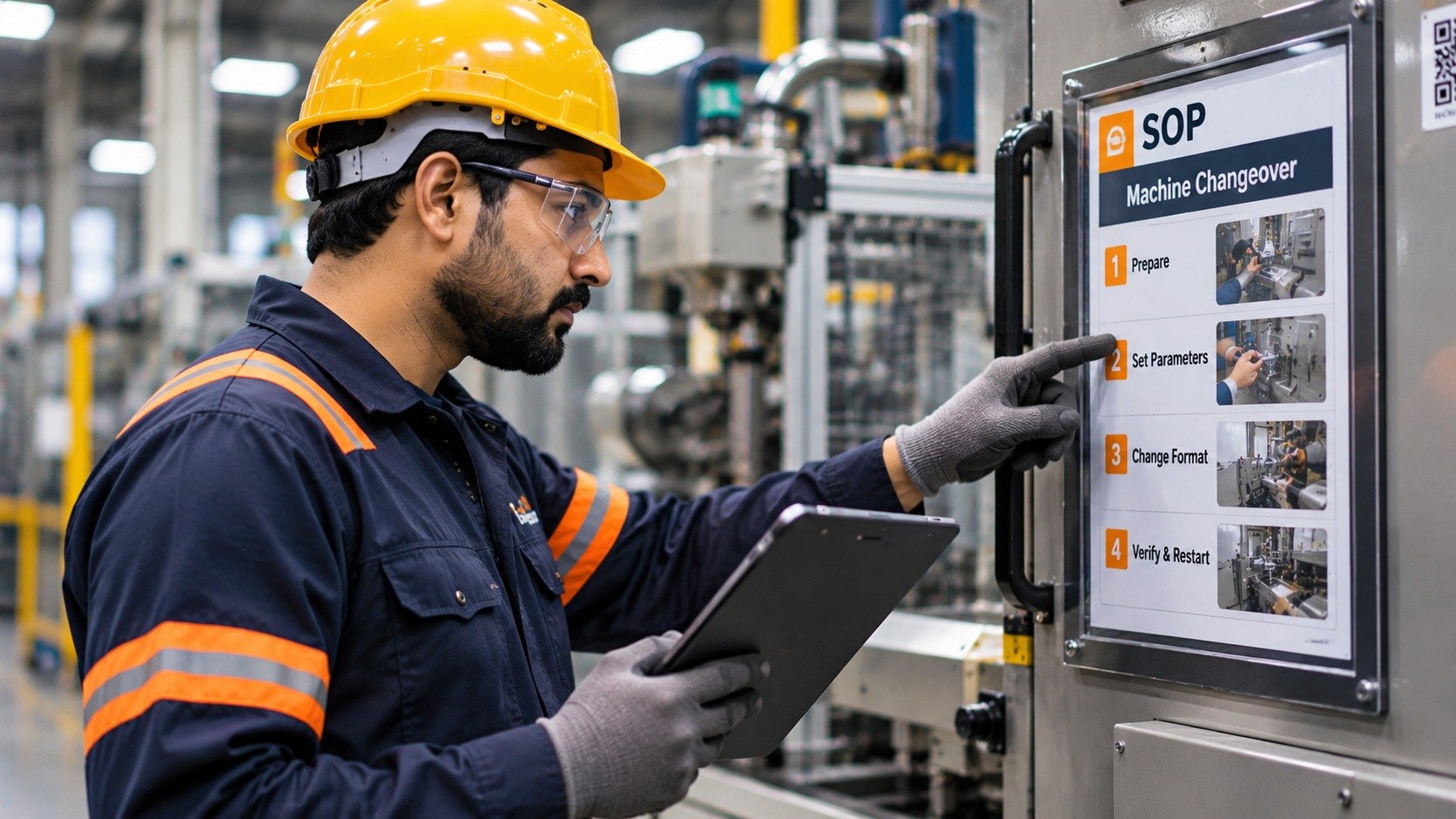
When the SOP Works on Paper but Fails on the Shop Floor
A procedure can be approved and technically correct yet still be difficult to use beside the machine. Explore what makes SOPs clear, accessible and reliable in real operating conditions.

The Factory Is Not a Collection of Departments
Manufacturing work rarely stays within one department. Explore how gaps in information, ownership and coordination at team handoffs can interrupt safe, continuous operations
Have a similar challenge on your site?
Tell us what you are trying to improve and we will help you find the practical next step.