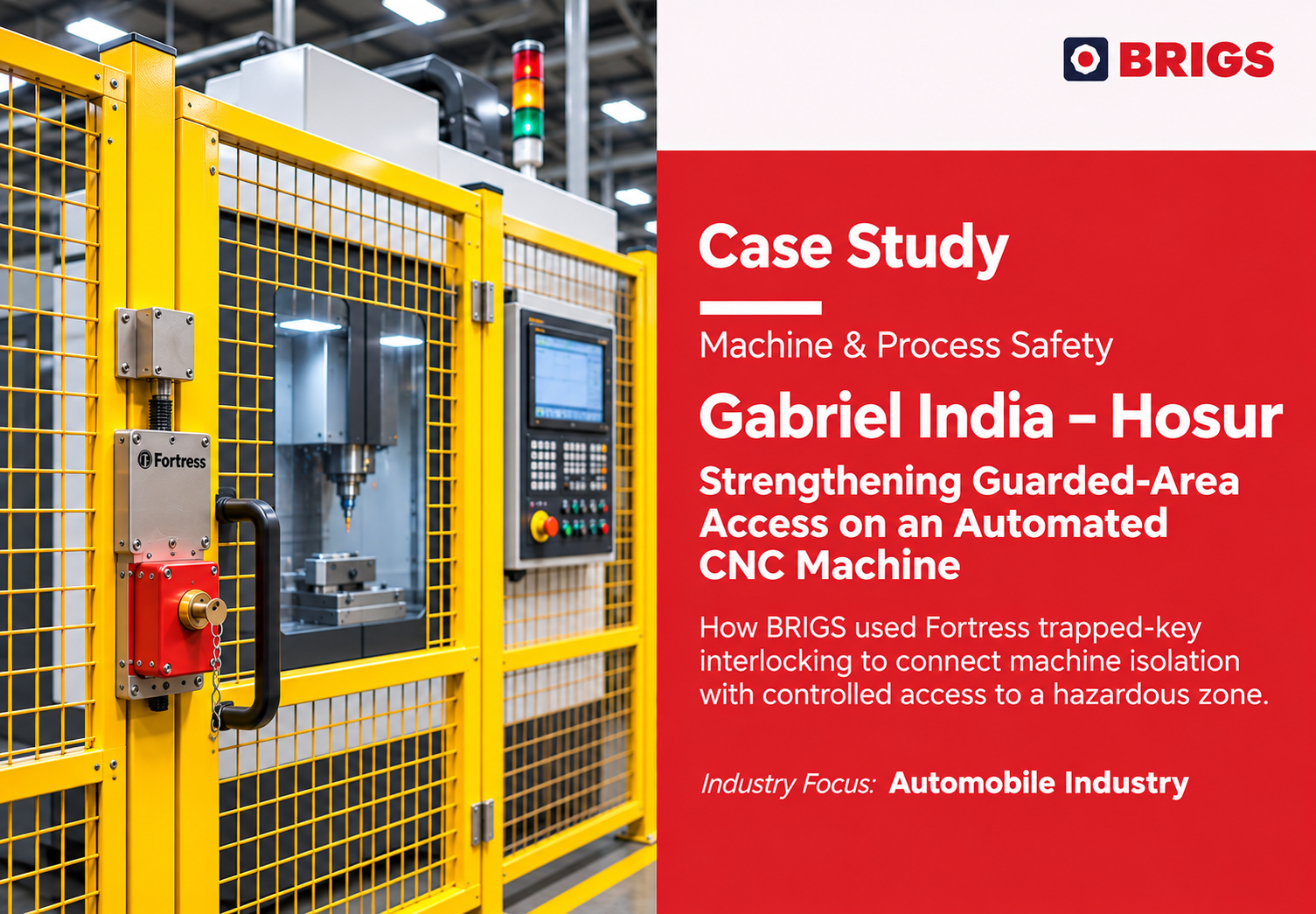
Safe access begins with controlling what happens before the gate opens.
01 — The Brief
Establishing Controlled Access to an Automated CNC Machine
At Gabriel India's Hosur facility, automated and robotized CNC machinery included guarded areas requiring controlled access.
The plant needed a stronger safeguarding arrangement for personnel entering these areas for maintenance, inspection and other intervention activities.
The requirement was to connect machine isolation with physical access and help prevent unexpected machine start-up while someone was inside the hazardous zone.
02 — The Challenge
When Physical Access and Machine Control Are Not Fully Linked
The existing arrangement did not provide a sufficiently robust key-dependent safety control between access and machine operation.
The main concerns included:
- Potential unauthorised entry into guarded areas.
- Risk of unexpected machine start-up during intervention.
- Absence of an effective key-transfer mechanism.
- Opportunities for process bypass or safety-control leakage.
The requirement was to make the relationship between machine safety, isolation, key control and access physically dependable.
03 — The BRIGS Solution
Making Key Dependency Part of the Safety System
BRIGS approached the requirement through its Machine & Process Safety expertise and recommended a proactive Fortress trapped-key interlocking solution.
The principle was straightforward: access to the hazardous area should depend on the machine first being brought into the required safe condition.
The functional sequence connected:
Machine Isolation → Key Release → Authorised Access
The person entering the guarded area retains the required personnel key, creating a physical dependency intended to prevent machine start-up while that key is held.
Relevant Machinery-Safety Standards
The engineering principles relate to:
- ISO 12100:2010: Machinery risk assessment and risk reduction.
- ISO 14119:2024: Design and selection of guard-associated interlocking devices, including trapped-key systems.
- ISO 14118:2017: Prevention of unexpected machine start-up during human intervention.
- ISO 13849-1:2023: Design and integration of safety-related control-system parts, where these form part of the machine's safety function.
These standards address different aspects of machinery safety. Their formal application to the Gabriel India installation has not been confirmed in the supplied project records.
04 — How BRIGS Implemented It
BRIGS conducted a Machine Safety assessment led by its licensed machine safety specialists and implemented the Fortress proactive trapped-key interlocking arrangement.
The documented functional sequence was:
1- Assess the existing safeguards: Examine access control, process leakage, potential bypass and unexpected start-up risks.
2- Establish machine isolation: Bring the machine into the required isolated condition.
3- Release the safety key: Make the required access key available through the defined isolation process.
4- Control guarded-area access: Use the released key to enable entry, with the personnel key retained by the person entering.
5- Integrate the safeguard: Link key dependency with machine operation to prevent restart while the access key is retained.
The supplied project document does not detail the actual key-exchange hardware, exit/reset sequence or functional test records. These must be verified against the project engineer's schematic and commissioning documentation.
05 — The Impact
A More Controlled and Key-Dependent Access Process
The intervention strengthened the relationship between machine isolation and guarded-area access.
Protection Against Unexpected Start-up
The arrangement was designed to prevent machine start-up while the personnel key was held.
Controlled Access
Entry became dependent on the defined isolation and key-transfer process.
Mandatory Key Dependency
Key control became part of the machine safety arrangement rather than an optional procedural step.
Reduced Bypass Opportunities
Physical interlocking reduced opportunities to circumvent the intended access sequence.
Improved Intervention Safety
Maintenance, inspection and other intervention activities were supported by a more structured access arrangement.
These outcomes are qualitative. No verified numerical performance measures or functional validation results were supplied.
The BRIGS Approach
The Gabriel India project reflects the BRIGS approach:
SEE → CONNECT → DIAGNOSE → DESIGN → IMPLEMENT → IMPROVE
The focus was on understanding the machine, identifying weaknesses in access control and connecting isolation, key dependency and physical access through an engineered safety arrangement.
The BRIGS Takeaway
In automated manufacturing, safe access cannot depend only on people remembering what should happen before entering a hazardous zone.
The machine, isolation process and access mechanism need to work together.
By implementing proactive Fortress trapped-key interlocking, BRIGS helped Gabriel India establish a more controlled relationship between machine isolation and guarded-area access.
When safe access is physically built into the sequence, safety becomes part of the process—not simply a step written beside it.
That is the value of engineered machine safeguarding.
Related reading
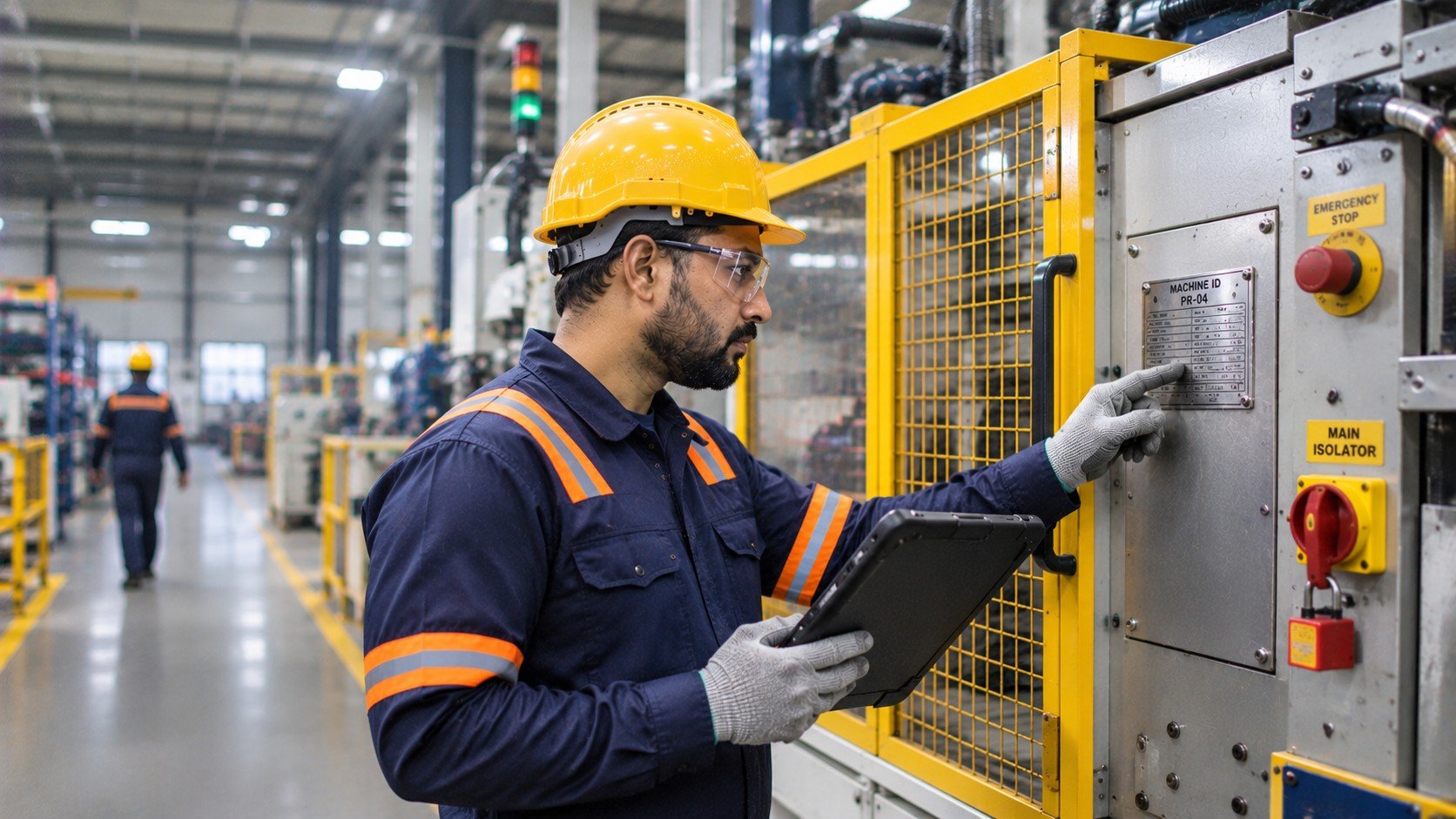
Machine Safety Begins at the Interface
A machine can have the right safeguards and still present challenges during real work. Discover how equipment, people, procedures and workplace information must work together to support safe interaction
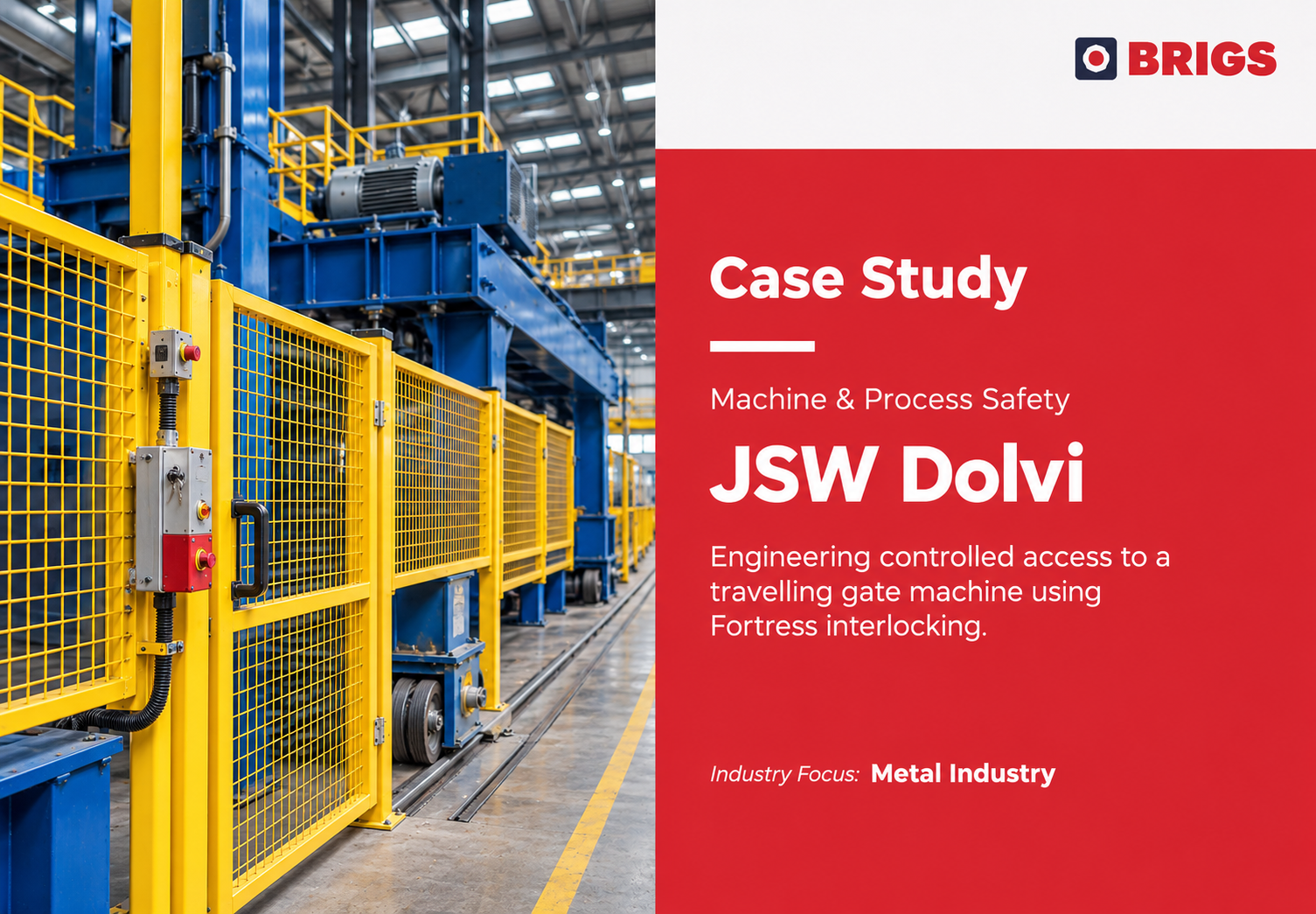
Engineering Controlled Access to a Travelling Gate Machine at JSW Dolvi
Following an injury caused by an unexpected machine start-up, BRIGS combined machine guarding and Fortress trapped-key interlocking to strengthen access control around JSW Dolvi's Travelling Gate machine.

Understanding the Factory as a Process
Understand how people, machines, processes and information work together—and why gaps between them can disrupt everyday factory operations. Explore how BRIGS identifies these gaps and improves the workplace through Factory UX, Factory OS, safety and process improvement.
Have a similar challenge on your site?
Tell us what you are trying to improve and we will help you find the practical next step.