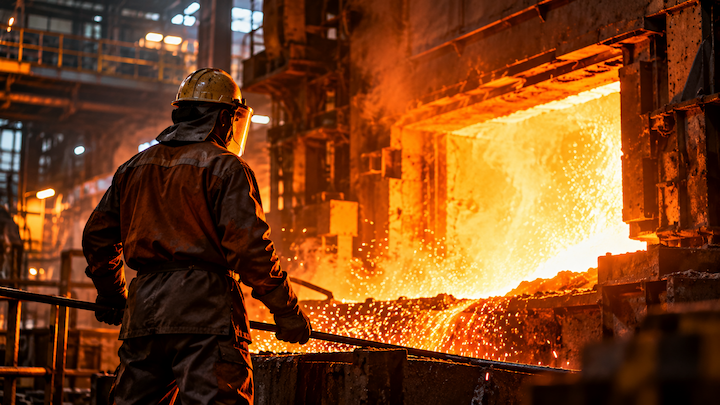
"The Railway Men" got me thinking
I was recently watching The Railway Men on Netflix, the series based on the Bhopal gas tragedy. It made me think about something we often overlook when we talk about industrial safety: how do we ensure that the right information actually reaches the person doing the job, at the place and time it is needed?
We talk a lot about SOPs, safety procedures, permits, approvals, audits, and compliance. Companies invest in software to manage all these things. Management gets dashboards, reports, and real-time visibility into operations.
But what about the people on the shop floor?
A maintenance technician may not have access to the latest SOP. A contract worker may not have a company login to access the safety instructions. A worker may receive a permit to perform a job without having easy access to the procedure that explains how to do it safely.
The information may exist somewhere in the system. But if it doesn't reach the worker at the point of need, does it really serve its purpose?
The gap between approval and execution
Consider a maintenance job in a process plant. The work is requested, the permit is approved, and the job is assigned. Everything looks fine on the management dashboard.
But has the technician seen the correct SOP? Have the required safety precautions and isolations been verified at the worksite? What happens if the actual site conditions differ from those assumed when the permit was approved?
An approval in a software system does not automatically make the worksite safe. The system must connect the approval process with the actual execution of work.
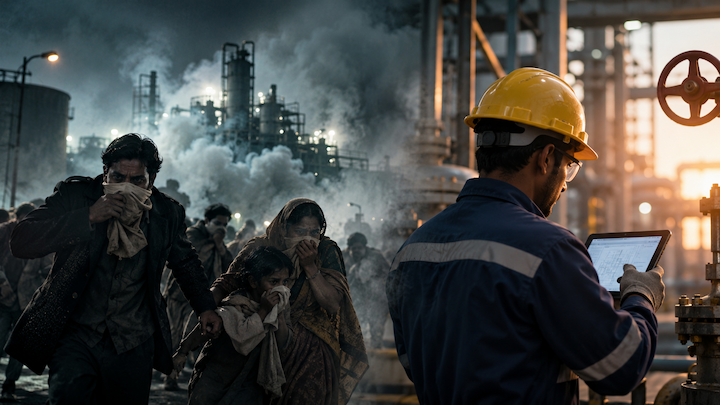
The Bhopal tragedy had complex technical and organizational causes, and it would be wrong to attribute it to a single missing SOP or failed approval. But it reminds us why industrial safety cannot remain confined to documents, procedures, and management systems. Safety controls must work in practice, where the risks exist.
Who are we building all this software for?
Most industrial software focuses on management, supervisors, and office-based teams. Meanwhile, in many contractor-heavy industrial environments, contract workers make up a substantial share of the workforce, sometimes 60–80%.
These are the people operating equipment, maintaining assets, handling materials, and working in hazardous areas. Yet they may have the least convenient access to the very information that is supposed to guide their work.
The same problem affects productivity. Workers waste time searching for instructions, waiting for clarifications, following outdated procedures, or depending on supervisors for information that should be readily available.
We cannot expect better safety and productivity simply by giving management better dashboards.
Digital transformation must reach the last mile
Imagine a factory where every worker can access the right SOP, safety instructions, training material, and task-specific information when and where required. Where permit approvals connect to actual work execution. Where supervisors can verify progress and identify gaps, and management retains visibility without creating unnecessary complexity for the people on the floor.
That is what industrial digital transformation should look like.
At BRiGS, this is the thinking behind FactoryOS: bringing the right information, workflows, and tools to the last-mile worker while keeping supervisors and management connected to what is happening on the floor.
Because ultimately, safety procedures don't prevent accidents just because they exist. They help prevent accidents when people can understand them, access them, and follow them at the right moment.
And productivity improves when workers spend less time searching for information and more time doing their jobs right.
The real question is not how many processes we have digitized. It is whether that digital transformation has reached the people who actually do the work.
Have a similar challenge on your site?
Tell us what you are trying to improve and we will help you find the practical next step.